Step 1 Understanding Population Need
Information Sources
Public data sources
- Household health survey 2018
- Disability Survey 2017
- Elderly Survey 2017
Examples of data available for 2016
- MOH Hospitals and Beds by Region
- Health Personnel in MOH by Profession and Nationality
- Visits of outpatients to MOH Hospitals’ Health Centers and Clinics by Region
- Visits of Outpatients to Various Health Sectors
- Inpatients at Various Health Sectors’ Hospitals in KSAArtificial Kidney Centers and Haemodialysis Patients by Health Sectors
Data From Primary care Systems- ELM and others
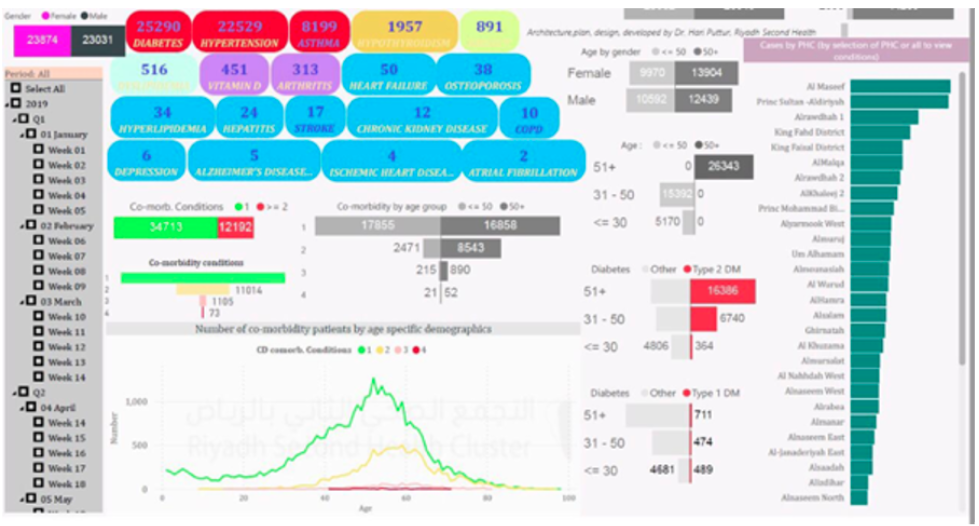
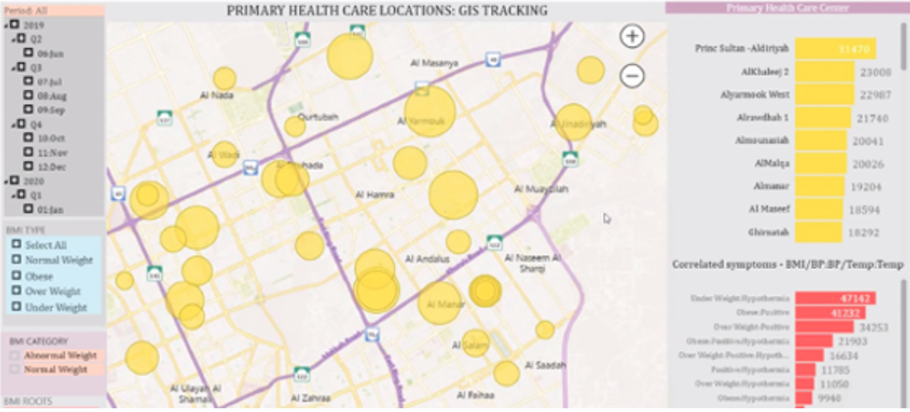
Data from Health needs Assessment Survey ( to enquire from PHAP or pilot sites)
Disease Registries
- Diabetes
- Sickle cell disease
- Renal Dialysis/ transplants
- Trauma registry
- Cancer Registry
Collating and Presenting Data
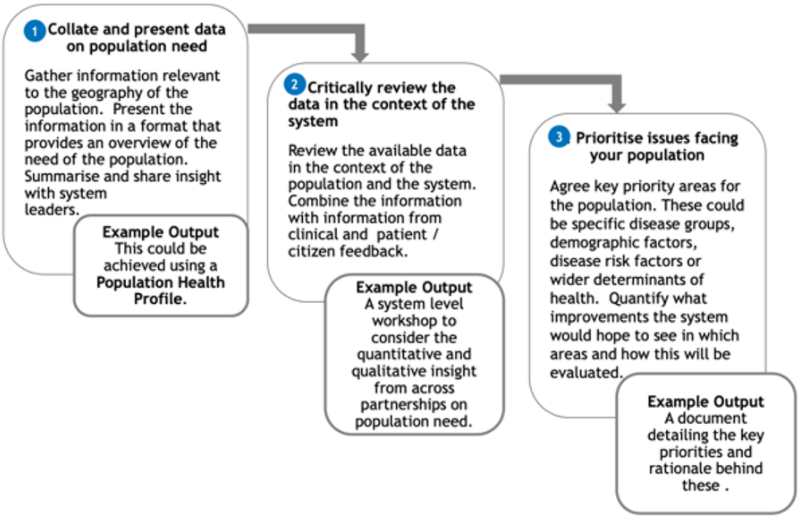
The first step in PHM intelligence is to understand the needs of the population as a whole, as well as the sub populations within it. In order to improve population outcomes the current state of population health needs to be understood.
The key questions to answer here are:
- 1. What is the size of our population?
- 2. What is the demographic distribution of our population?
- 3. What are the key health and care issues affecting our population?
- 4. Where should we focus our efforts?
Population Health Profile
There are multiple international best practices but we can start simple and then make it more extensive as our data sources become rich
Example Health Profile Questionnaire for each Cluster
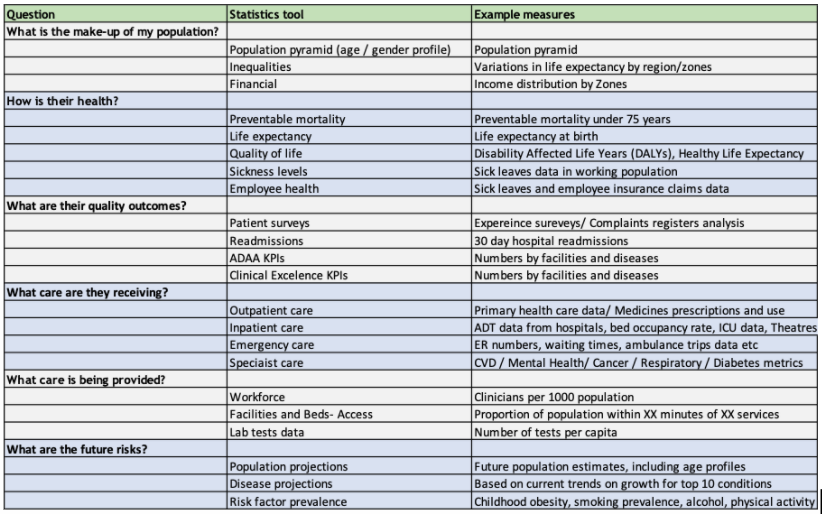
Example Health Profile Questionnaire for each Cluster
https://fingertips.phe.org.uk/indicator-list/view/gf9um5o30K/page-options/ovw-tdo-0#page/0/gid/1/pat/166/par/E38000221/ati/7/are/K81081/cid/4/tbm/1/page-options/ovw-tdo-0
System Level Workshop
Once intelligence has been gathered on population needs this information should be combined with other sources; such as feedback from clinicians, other service providers and members of the population in order to decide on key priorities.
One mechanism for facilitating this would be to run a system level Population Health workshop. The aim of this workshop is to align population needs assessment intelligence with other priorities to decide on key system priorities.
Representation at the workshop would include:
- BU and the planning team
- Cluster population health leads
- MOC System leads/ Hub representatives
- Constituent provider organisations leads- VP Community/ Public health and Primary Care
- Clinicians and social care professionals including Directors of Public Health.
- Other key local organisations
- Public representation
Activities at the workshop could include:
- Introduction – definition and purpose of PHM
- Presentation of Health Profile (or similar overall summary of population health)
- Clinical perspective on perceived population needs
- Service user perspective on priorities
- Group discussion on aligning outputs of the needs assessment with other priorities
Outputs from the workshop would include
- Cluster PHM Strategy areas to focus on
- Recommendations for 3-5 agreed priorities
- Identification of key gaps in intelligence that are required to support priority areas
Prioritisation and Cluster PHM Needs
To set priorities for population segmentation and on-going population health management key areas of need should be agreed and communicated.
This document should:
- Be a short paper communicating ideally 3-5 priority areas identified through the needs assessment process.
- Have clinical and analytical input and should be to be presented in a format that is accessible to both system leaders and people living and working in the population served by the system.
- Clearly set out the rationale including quantitative and qualitative evidence for the chosen priority areas and who has contributed to the decision making.
- Briefly communicate the next steps for how the identified needs will now influence population segmentation and additional Population Health Management techniques to translate to action.
- Communicate what improvements the system hopes to achieve in these areas and in what timescales and how this will be measured.
In addition to the prioritisation process the Cluster should develop a Strategic Needs and planning document focussing on:
- Decide on how population need will be identified at:
- System level
- Place level
- Community / Neighbourhood Level
- Decide on what outcome measures will be used across the population.
- Identify data sources that illustrate the outcome measures for the defined population.
- Information for System Level Profile
- Collate the information on population need and share across the system.
- Combine information on need with views from across the system in a transparent way to summarise the agreed need for the population.
- Communicate the agreed areas of need for the population
- Identify clearly the gaps and dependencies and demonstrated plan to work on them
Below are the templates and example worked out for a Cluster
1. Cluster Population Health Profile
Attach Downloadable template for Cluster population health profile
2. Cluster PHM Workshop agenda and slides to define PHM priorities and needs
Attach Downloadable template for Cluster PHM workshop slides
3. Cluster PHM Priority and Strategic Needs template
Attach Downloadable template for Cluster PHM Priority and Strategy document

